The Best Climate Change Documentaries to Watch
From An Inconvenient Truth to quieter, more recent films, a cinephile's guide to climate documentaries that move you to think rather than despair.
The hard part about climate documentaries isn’t finding them; it’s finding ones that don’t leave you flattened and useless. The genre tilts toward two failure modes — the dry slideshow of charts, and the apocalyptic montage designed to terrify. The films I keep returning to do neither. They make the abstract concrete, find human stories inside the data, and trust you to act on what you’ve understood. Here are the ones worth your evening.
This subject overlaps a lot with energy policy, so you may also want the nuclear and energy documentaries — the two debates are inseparable. As ever, check JustWatch for current streaming.
The landmarks
An Inconvenient Truth (2006, Davis Guggenheim)
It’s easy to be cool about it now, but Al Gore’s slideshow film genuinely moved the needle of public awareness, won the Oscar and dated remarkably well on the science. Watch it as a historical document and a piece of persuasion, both.
Chasing Ice (2012, Jeff Orlowski)
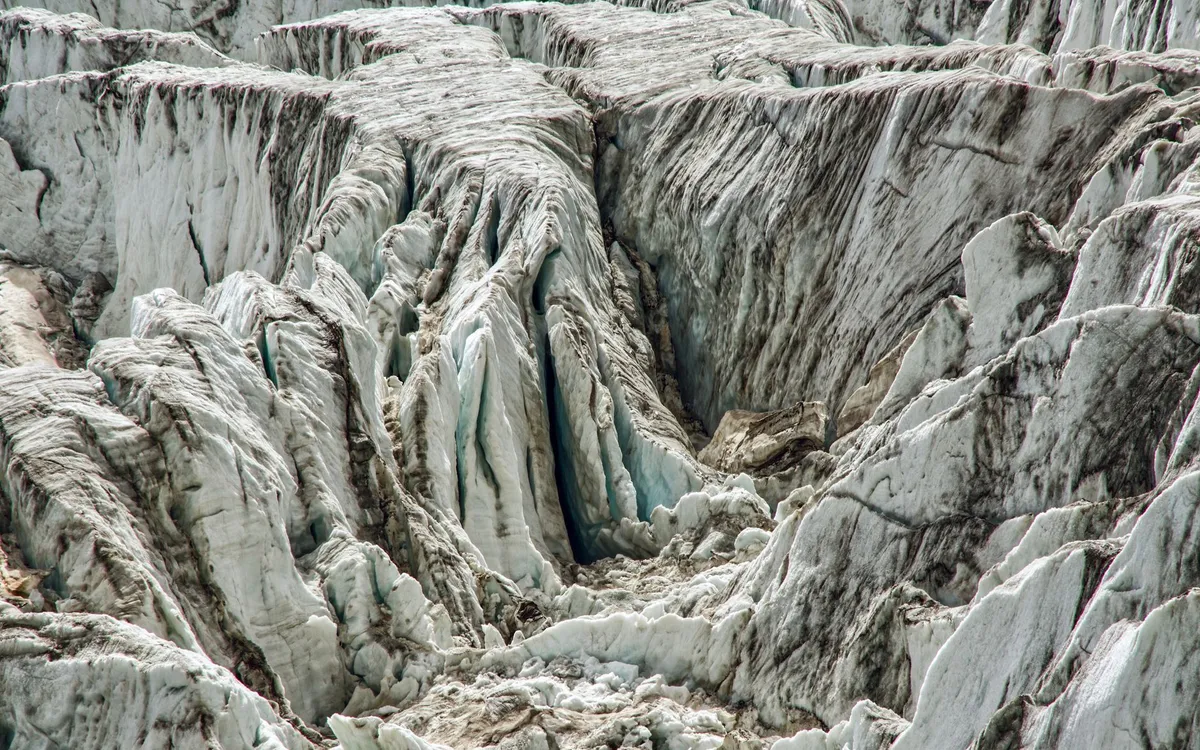
Photographer James Balog plants time-lapse cameras across the Arctic to record glaciers retreating. The footage of a Manhattan-sized chunk of ice calving is the single most visceral image of climate change ever filmed. It does in pictures what no graph can.
Before the Flood (2016, Fisher Stevens)
Leonardo DiCaprio’s globe-trotting survey is glossy and a touch celebrity-heavy, but it’s a solid, wide-angle primer and it streams free in plenty of places — useful for showing someone who’s never engaged with the topic.
The quieter, sharper recent work
Chasing Coral (2017, Jeff Orlowski)
Orlowski’s follow-up to Chasing Ice, this time documenting coral bleaching in real time. The reveal — reefs turning ghost-white over weeks — is heartbreaking and beautifully shot. On Netflix.
Anthropocene: The Human Epoch (2018, Jennifer Baichwal, Nicholas de Pencier & Edward Burtynsky)
Less argument, more awe and dread. Burtynsky’s vast, painterly imagery of mines, dumps and altered landscapes makes the scale of human impact legible in a way statistics never manage. A gallery you can sit inside.
Honeyland (2019, Tamara Kotevska & Ljubomir Stefanov)
Not a “climate film” by label, but few works capture the cost of broken balance with the natural world more poignantly. I’ve written more about it in the MUBI list. Watch it as a parable.
When you want the systemic picture
The True Cost (2015, Andrew Morgan)
Fast fashion’s environmental and human toll, traced from runway to landfill. It widens the climate conversation beyond smokestacks to consumption itself.
Kiss the Ground (2020, Joshua & Rebecca Tickell)
Narrated by Woody Harrelson, this makes the case for regenerative agriculture and soil as a carbon sink. Optimistic to a fault — some scientists push back on the claims — but valuable precisely because it offers a “what we could do” rather than only “how bad it is.” On Netflix.
A Plastic Ocean (2016, Craig Leeson)
Journalist Leeson sets out to film blue whales and instead keeps running into garbage, and the film follows that thread across the planet’s oceans. The footage of plastic working its way into the food chain reframes a problem most of us file under “litter” as something closer to a slow poisoning. Streaming on several services; check JustWatch.
Cowspiracy (2014, Kip Andersen & Keegan Kuhn)
A scrappy, provocative argument that animal agriculture is the climate story nobody wants to tell. It plays loose with some figures and has been challenged on them — watch it skeptically — but it widened the conversation, and that’s worth something. On Netflix.
| Title | Year | Director | Why |
|---|---|---|---|
| Chasing Ice | 2012 | Jeff Orlowski | The image that lands hardest |
| Anthropocene | 2018 | Baichwal et al. | Scale made visible |
| Chasing Coral | 2017 | Jeff Orlowski | Loss in real time |
| The True Cost | 2015 | Andrew Morgan | Consumption, not just carbon |
| Kiss the Ground | 2020 | Tickell & Tickell | A way forward |
How to watch without drowning in dread
My honest advice: don’t binge these. One climate documentary a week is plenty, and I’d pair the alarming ones (Chasing Ice, Anthropocene) with something that points at solutions (Kiss the Ground) so you come away with somewhere to put the feeling. The films that left me changed weren’t the scariest — they were the ones that made me see a single glacier, a single reef, a single beekeeper, and feel the scale through one concrete thing.
A note on the science: documentary is persuasion, not peer review. The best of these are broadly sound, but a couple — Kiss the Ground especially — make optimistic claims that researchers have contested. Treat them as starting points for reading, not final word. That’s true of any issue documentary, climate included.
Many of these surface free on ad-supported platforms and public broadcasters, so cost shouldn’t stop you — I’ve mapped the legal options in where to watch free documentaries. For everything else in this corner of nonfiction, browse the where to watch hub, and confirm current availability on JustWatch before settling in.
The Best Climate Change Documentaries to Watch
Find where every documentary is streaming and start watching in a couple of clicks.
Find it on JustWatchSome links on Indian Point Film are affiliate links: if you buy or subscribe through them we may earn a commission, at no extra cost to you. It never changes our recommendations.
Keep reading

The Best Travel Documentaries to Watch Before You Go
The films to watch before you pack a bag — from the Himalayas to the Nile to the French Riviera.
The 25 Best Documentaries on Netflix Right Now
A working list of the Netflix documentaries I keep coming back to and pressing on friends.
The Best Documentaries About India
The films that capture India's contradictions — from Varanasi's ghats to the textile factories of Gujarat.