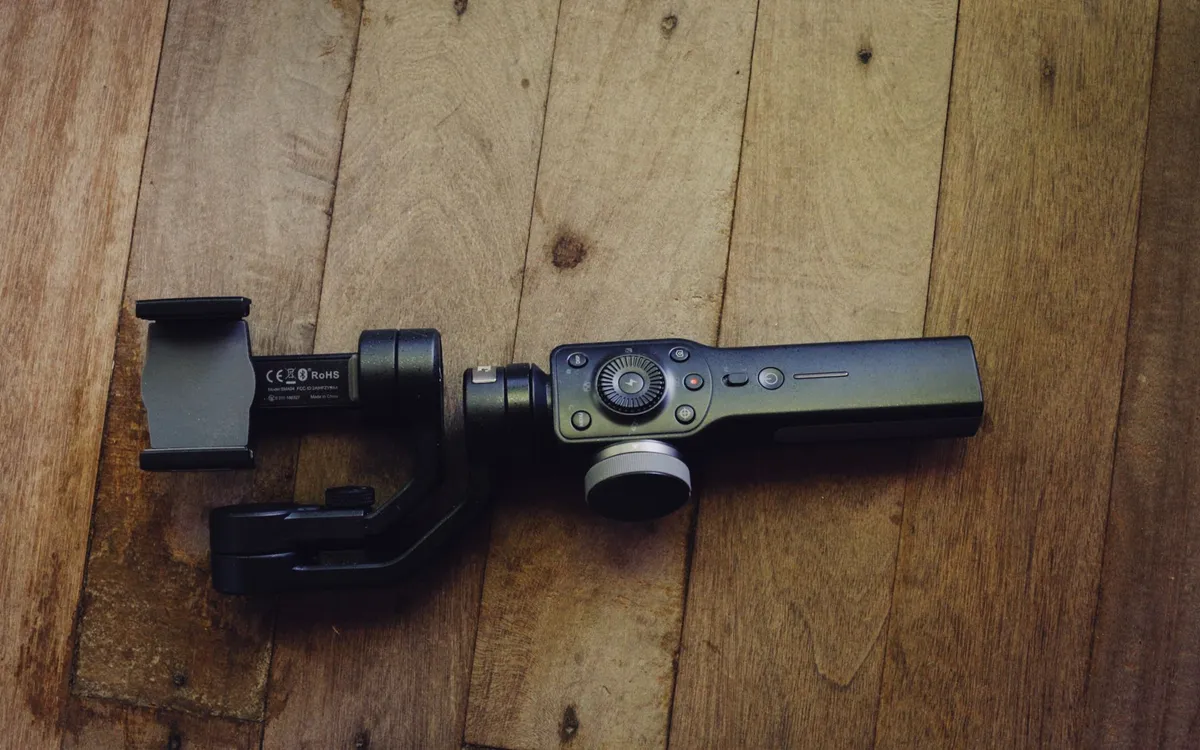
A gimbal is one of those tools that looks like a gimmick until the day it saves your footage. Documentary lives on the move — following a subject down a corridor, walking a market, catching a moment that won’t repeat. Handheld at a walk is jittery; a gimbal smooths the walk into a glide. It won’t make a boring shot interesting, but it’ll keep a good moving shot from being unusable.
The catch is that gimbals demand discipline. Balancing one properly takes practice, the batteries die, and an unbalanced gimbal will fight you and chew through power. Buy one that matches your camera’s weight, learn to balance it, and it becomes invisible. Here’s what’s worth owning at the budget end, where these things have gotten genuinely good.
DJI RS 2 / RSC 2 — the all-rounder
DJI dominates this category for a reason: their gimbals are reliable, the app is sane, and the build quality is a cut above. The RSC 2 (around $400) folds down small and handles mirrorless bodies with most lenses comfortably — perfect for an A7S III or GH5. The bigger RS 2 (around $700) carries heavier cinema setups. Both have a clever locking design that speeds up balancing, and the motors are strong enough that you’re not babying them. If you want one gimbal that just works, start with DJI.
Zhiyun Weebill S / Weebill 2 — the compact contender
Zhiyun has long been DJI’s closest rival, and the Weebill series is their run-and-gun answer. The Weebill S (often well under $400) is compact, light, and has a smart underslung grip that’s lovely for low-angle moving shots — great for following kids, animals, anything close to the ground. Payload is a touch lower than the comparable DJI, so check your camera-plus-lens weight, but for a mirrorless rig it’s a strong, often cheaper, choice.
Moza Air 2 / AirCross — the value pick
Moza tends to undercut on price while offering surprisingly high payload. The Air 2 (around $400 and often discounted) handles heavier loads than you’d expect for the money, with long battery life that matters on a full shooting day. The app and ecosystem aren’t quite as polished as DJI’s, but if you’re carrying a heavier camera and watching every dollar, Moza often gives you the most capability per euro.
DJI OM / phone gimbals — the pocket option
Don’t sleep on phone gimbals. The DJI OM series (around $150) stabilizes a smartphone beautifully, and modern phones shoot footage good enough to intercut in a real documentary. For a B-roll grab, a quick walk-and-talk, or a shoot where you can’t carry the big rig, a phone on a small gimbal is a genuinely useful tool — and it fits in a jacket pocket.
Quick comparison
| Gimbal | Payload | Best for | Rough price |
|---|---|---|---|
| DJI RSC 2 | Mirrorless + most lenses | Reliable all-rounder | ~$400 |
| DJI RS 2 | Heavier cinema rigs | Bigger cameras | ~$700 |
| Zhiyun Weebill S | Lighter mirrorless | Low-angle, compact | <$400 |
| Moza Air 2 | High payload | Value, long days | ~$400 |
| DJI OM (phone) | Smartphone | Pocket B-roll | ~$150 |
How to choose — and how to shoot with one
First, match the payload to your actual rig — camera, lens, and any monitor or mic on top. A gimbal that’s maxed out will strain, drain its battery fast, and produce micro-jitters. Weigh your setup and leave headroom.
Second, be honest about how often you’ll move the camera. If 90% of your work is locked-off interviews, a gimbal will sit in the bag. If you follow people and chase moments, it earns its place. For pure stability on static shots, a good tripod does more.
When you do shoot, technique is everything. Learn the “ninja walk” — bend your knees, roll heel to toe, and let your legs absorb the bounce; the gimbal handles rotation, not vertical bob. Move slowly and deliberately; a gimbal makes slow moves look cinematic and fast moves look frantic. And always balance before powering on — a balanced gimbal sips battery and tracks cleanly, an unbalanced one fights you all day. Get those habits down and a $400 stabilizer will give you moving shots that used to require a dolly and a crew. If you’re building out a full kit, see where a gimbal fits in a complete setup under $2,000.
The Best Budget Gimbals for Run-and-Gun Shooting
We test and recommend documentary gear independently. Buying through our partner links helps fund the magazine, at no extra cost to you.
Browse gear at B&HSome links on Indian Point Film are affiliate links: if you buy or subscribe through them we may earn a commission, at no extra cost to you. It never changes our recommendations.
Keep reading
The Best Cameras for Documentary Filmmaking
Forget the spec-sheet wars. Here's what a documentary camera actually needs to do, and the bodies that do it.
The Best Lavalier Microphones for Interviews on a Budget
Bad sound kills a documentary faster than bad pictures. Here are the lav mics that'll save your interviews without draining the budget.
The Best Audio Recorders for Documentary Sound
Your camera records sound. It records it badly. Here's why a dedicated field recorder belongs in your bag, and which one to buy.