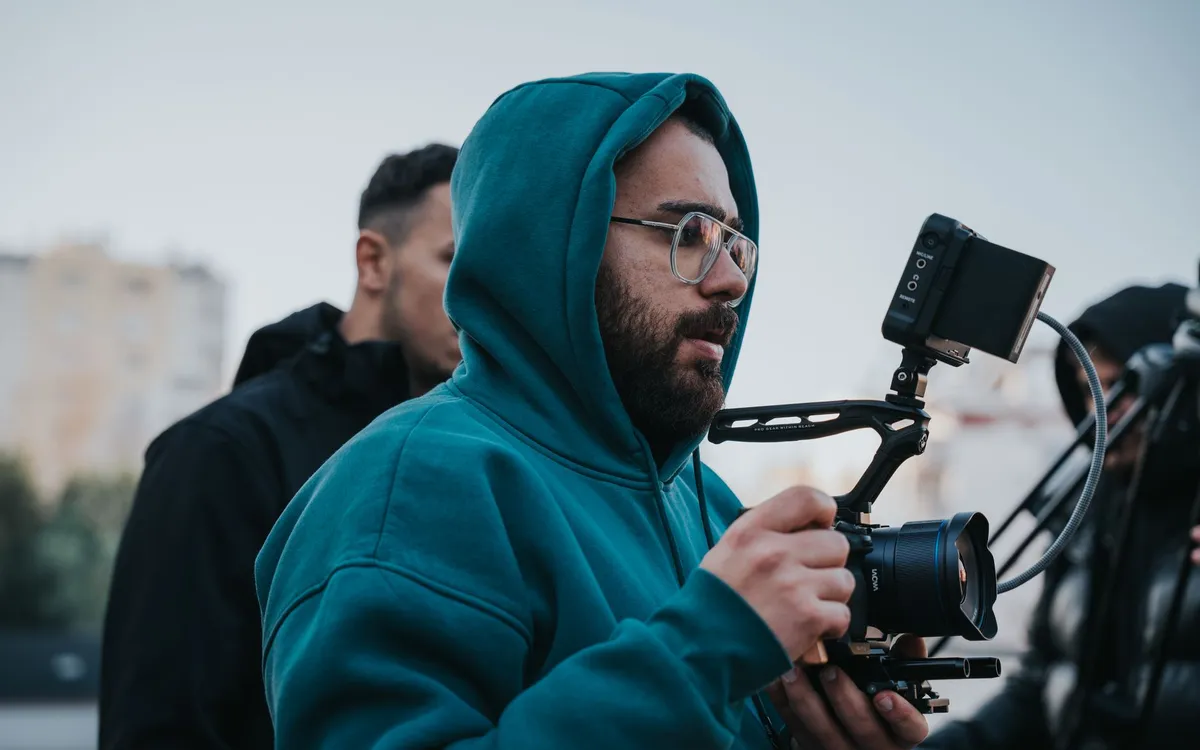
The camera matters less than people think, and more than they want to admit. Less, because a great doc has been shot on phones, on borrowed DSLRs, on whatever was in the bag. More, because the wrong body will fight you in exactly the situations documentary throws at you — a dim room you can’t relight, a subject who won’t wait for you to nail focus, a four-hour vigil where the camera overheats at minute twelve.
So before the picks, here’s what I actually care about in the field. Low-light performance, because you rarely control the room. Reliable autofocus, because you’re often a one-person crew and can’t pull focus by hand while also running sound. Long record times without overheating. Good internal codecs so you’re not chained to an external recorder. And a form factor you can hold to your eye for an hour without your shoulder filing a complaint. Resolution? Way down the list. Nobody ever lost a festival slot over 4K versus 6K.
Sony A7S III — the low-light workhorse
If I could only own one body for documentary, this is it. The A7S III’s full-frame sensor is genuinely absurd in the dark — you can shoot a candlelit interview at ISO 12800 and clean it up in post without it falling apart. Autofocus is sticky and trustworthy, which matters when your subject leans forward mid-sentence. No record limit, minimal overheating, and the codec is good enough that I rarely bother with an external recorder. It’s pricey (around $3,500 body-only) and 12 megapixels is thin if you also shoot stills, but for video it’s the one I reach for. Pair it with the right glass and you’re set — see my lens picks for what to put in front of it.
Panasonic GH5 / GH5S — the budget verité machine
The GH5 is the camera that put serious video in reach of broke filmmakers, and it still earns a spot. Micro Four Thirds means small, cheap lenses and a body you can hand-hold all day. Internal 10-bit recording, unlimited record times, and image stabilization good enough to fake a gimbal in a pinch. The GH5S trades stabilization for better low light. Either runs used for well under a grand now. The sensor is smaller, so you work harder for shallow depth and clean shadows, but for run-and-gun verité it punches way above its price.
Canon C70 — the cinema body that behaves
When budget allows, a proper cinema camera changes how you work. The C70 has built-in ND filters (a genuine quality-of-life upgrade outdoors), Canon’s lovely color science, dual card slots, and Dual Pixel autofocus that’s among the best in the business. Super 35 sensor, RF mount, and it’s small enough to handhold — which is not a given in cinema bodies. Around $5,500. If you’re billing clients or shooting a funded feature, the ergonomics pay for themselves.
Fujifilm X-T4 — the stills-shooter’s crossover
For the documentarian who also shoots photographs (and many do — stills sell stories), the X-T4 is a lovely dual-purpose body. Excellent in-body stabilization, film simulations that get you 80% of the way to a graded look in-camera, and a mechanical-feeling shooting experience. Autofocus isn’t quite Sony or Canon level, but it’s improved enormously. Around $1,700.
Quick comparison
| Camera | Sensor | Best for | Rough price |
|---|---|---|---|
| Sony A7S III | Full-frame | Low light, one-person crews | ~$3,500 |
| Panasonic GH5 | Micro 4/3 | Budget verité, run-and-gun | <$1,000 used |
| Canon C70 | Super 35 | Funded shoots, client work | ~$5,500 |
| Fujifilm X-T4 | APS-C | Stills + video hybrid | ~$1,700 |
How to actually choose
Start with the dark. If you shoot in rooms you can’t light — and documentary lives in those rooms — low-light capability outranks almost everything. That points you toward the A7S III or, on a budget, the GH5S.
Then think about whether you work alone. Solo shooters live and die by autofocus; Sony and Canon lead there. If you’ve got a focus puller or you shoot static interviews where you set focus once, you have more freedom.
Don’t over-buy. A more expensive body won’t make your film better — it’ll just record your mistakes in higher fidelity. The money you save on a used GH5 is money for a proper microphone, which will improve your film far more than any sensor upgrade. Honestly, if you’ve got $2,000 total, I’d spend less on the camera and more on sound and light — see how I’d build a complete kit under $2,000 for that math.
Finally: rent before you buy anything in the cinema-camera tier. A weekend with the actual body, in your actual shooting conditions, tells you more than every review online combined — including this one. The best camera is the one that disappears in your hands and lets you pay attention to the person in front of you. That’s the whole job.
The Best Cameras for Documentary Filmmaking
We test and recommend documentary gear independently. Buying through our partner links helps fund the magazine, at no extra cost to you.
Browse gear at B&HSome links on Indian Point Film are affiliate links: if you buy or subscribe through them we may earn a commission, at no extra cost to you. It never changes our recommendations.
Keep reading
The Best Lavalier Microphones for Interviews on a Budget
Bad sound kills a documentary faster than bad pictures. Here are the lav mics that'll save your interviews without draining the budget.
The Best Audio Recorders for Documentary Sound
Your camera records sound. It records it badly. Here's why a dedicated field recorder belongs in your bag, and which one to buy.
The Best Budget Gimbals for Run-and-Gun Shooting
A gimbal turns shaky handheld into smooth, moving footage — if you pick the right one and don't fight it. Here's what to buy.